Why Your Ads, Content and Store Need One Marketing Plan
Your ads say one thing, your posts another, your store a third. Here is how one 90-day marketing plan connects them, and how to run it every week.
Most small brands don't have a marketing plan. They have a list of channels.
Your ads talk about a discount. Your Instagram talks about a new collection. Your emails talk about something else. Your store's homepage still shows last month's launch.
Each piece might be good on its own. Together, they confuse the customer. That's the cost of not having one plan: every channel works hard, and nothing adds up.
Signs your marketing isn't working as one
Be honest with yourself about these:
- Your ads, posts and emails say different things in the same week.
- You plan most campaigns a week before they go live, or less.
- You can't say which channel brings your best customers.
- Launches and sales happen without content planned around them.
- Your budget is split by habit, not by results.
If two or more sound familiar, the problem isn't effort. It's that nothing connects the pieces.
What one marketing plan covers
A good plan fits on a few pages and answers six questions:
- Audience and market. Who buys, why they buy, and what they compare you with.
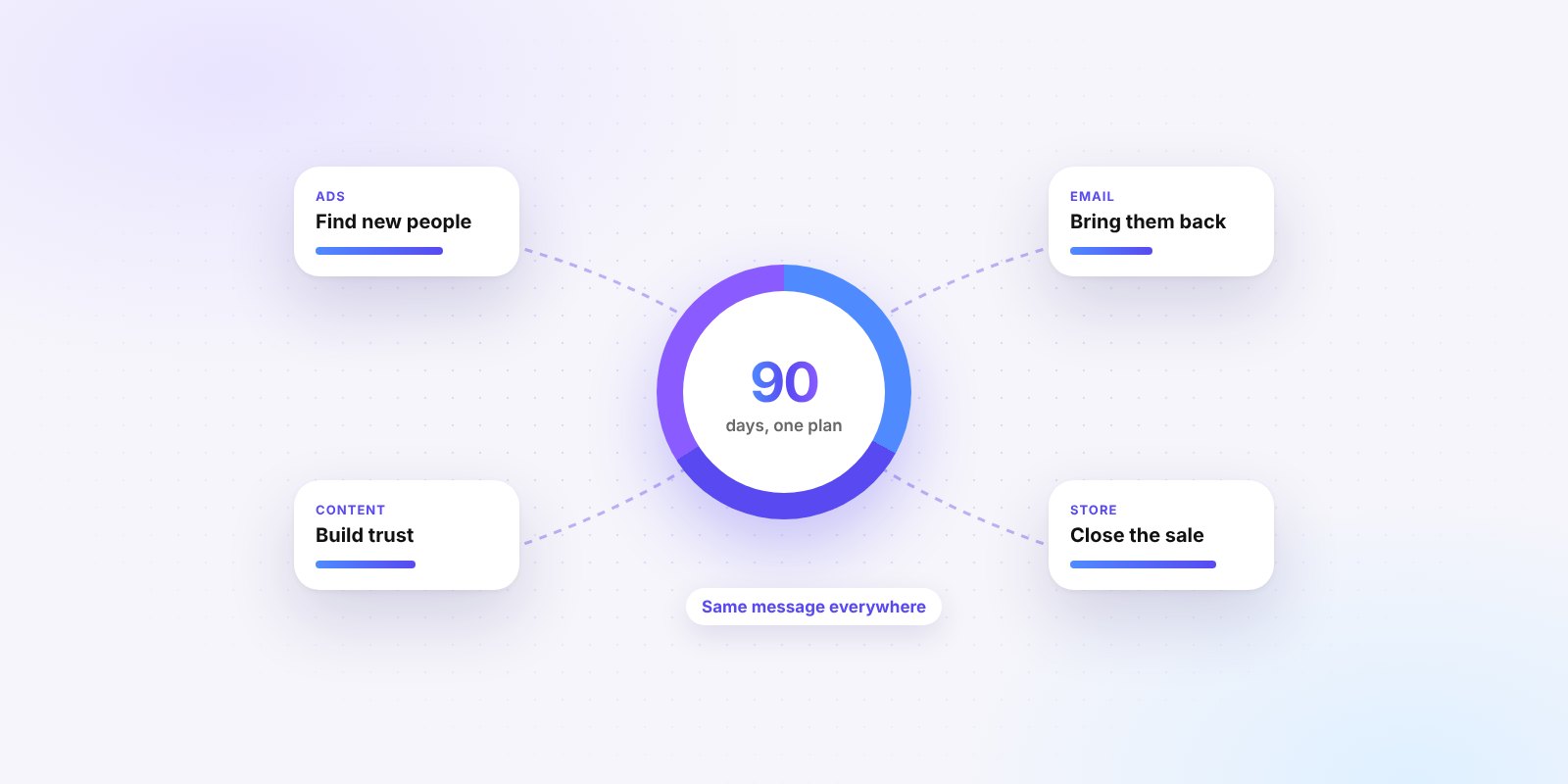
- Message and offer. The one idea every channel repeats this quarter.
- Channels. Which channels get a job, and what that job is. Ads find new people, content builds trust, email brings people back.
- Budget split. How much goes where, and the rule for moving it.
- Calendar. Every launch, sale, event and content theme on one timeline.
- Measurement. The few numbers that tell you it's working.
A 90-day marketing plan, in order
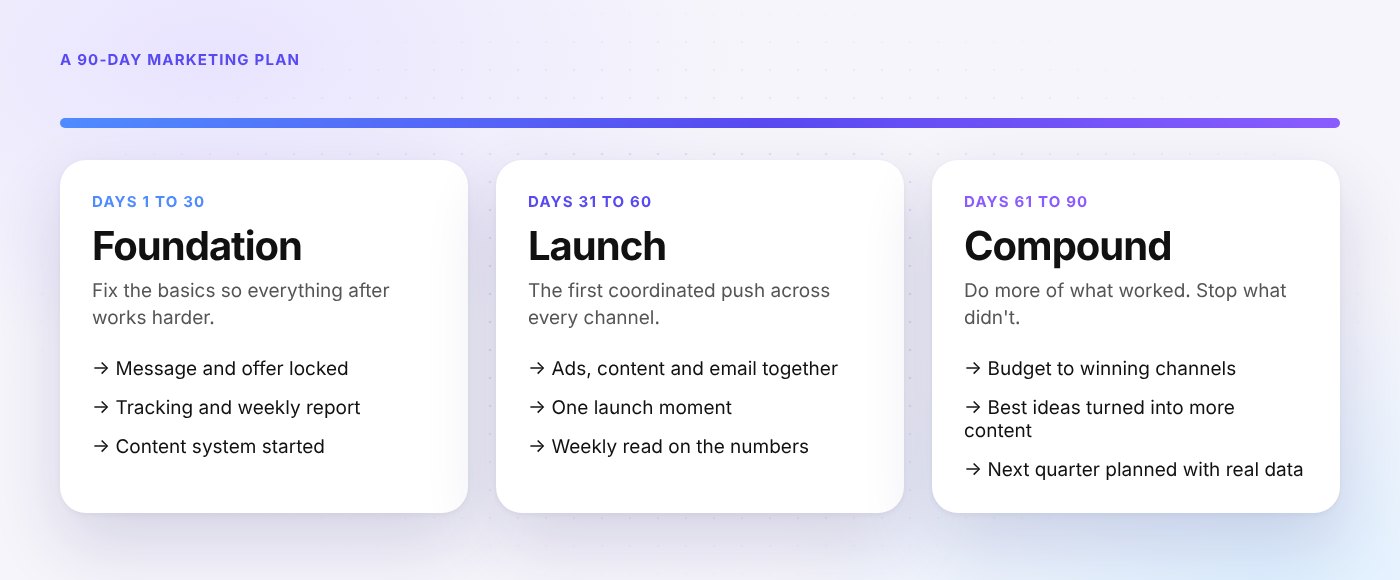
Ninety days is long enough to see results and short enough to stay focused. Split it into three parts.
Days 1 to 30: Foundation
Fix the basics so everything after works harder.
- Lock the message and the offer.
- Set up tracking and a simple weekly report.
- Start a content system you can keep up with.
Days 31 to 60: Launch
The first coordinated push, across every channel at once.
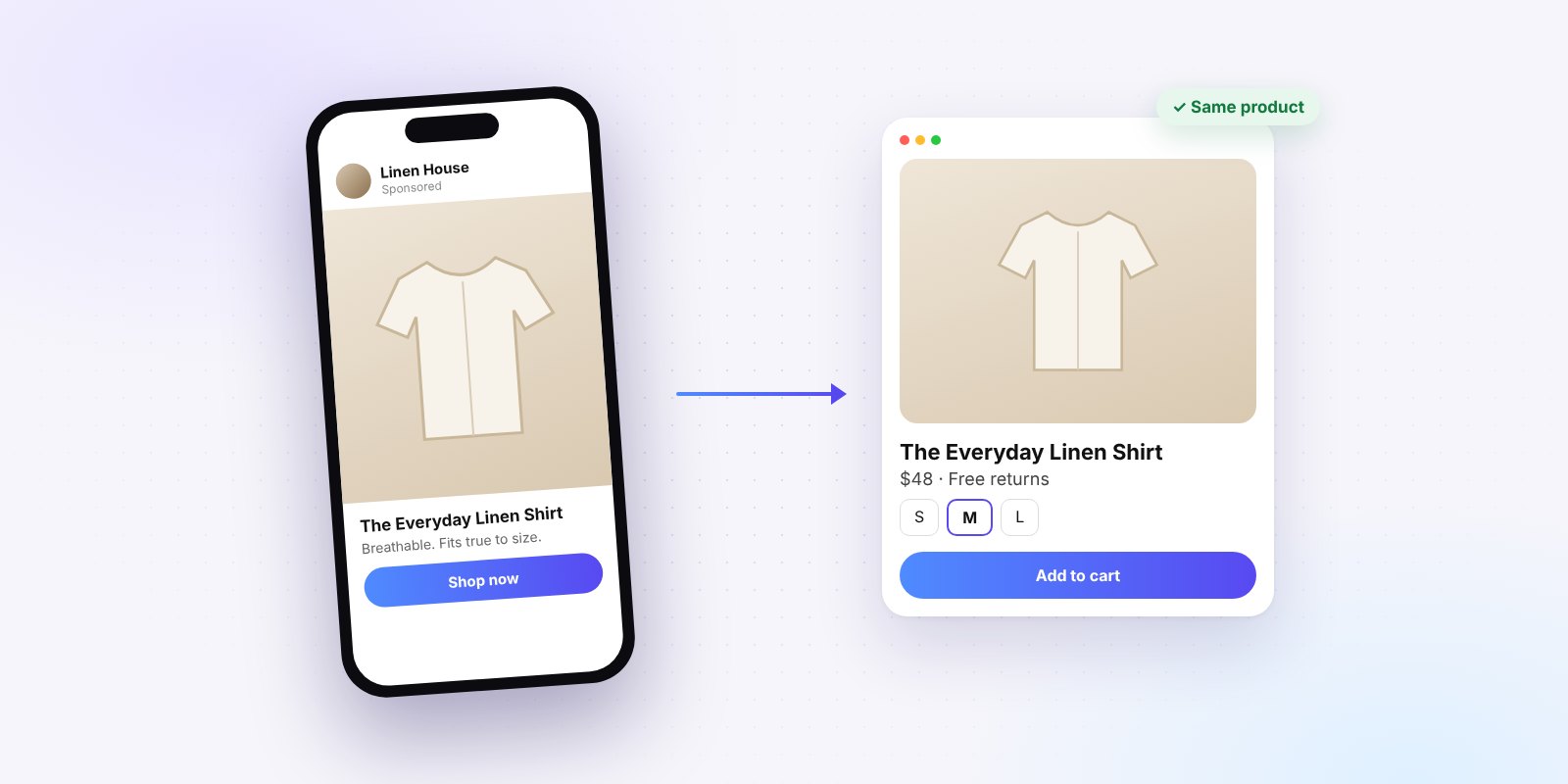
- Ads, content and emails go live with the same message.
- Plan one launch moment: a product drop, an event or a limited collection.
- Read the numbers every week.
Days 61 to 90: Compound
Do more of what worked, and stop what didn't.
- Move budget to the winning channels.
- Turn the best-performing ideas into more content.
- Draft next quarter's plan with real data.
How to split the budget
You don't need a perfect split on day one. You need a starting point and a rule for changing it.
- Start with what already works. If one channel brings most of your sales today, keep it funded while you test others.
- Give tests a fixed slice. Set aside a small, fixed share of the budget for new ideas, so a failed test never hurts the core.
- Move money on results, not opinions. Every two weeks, shift budget toward the channel with the best cost per sale, in small steps.
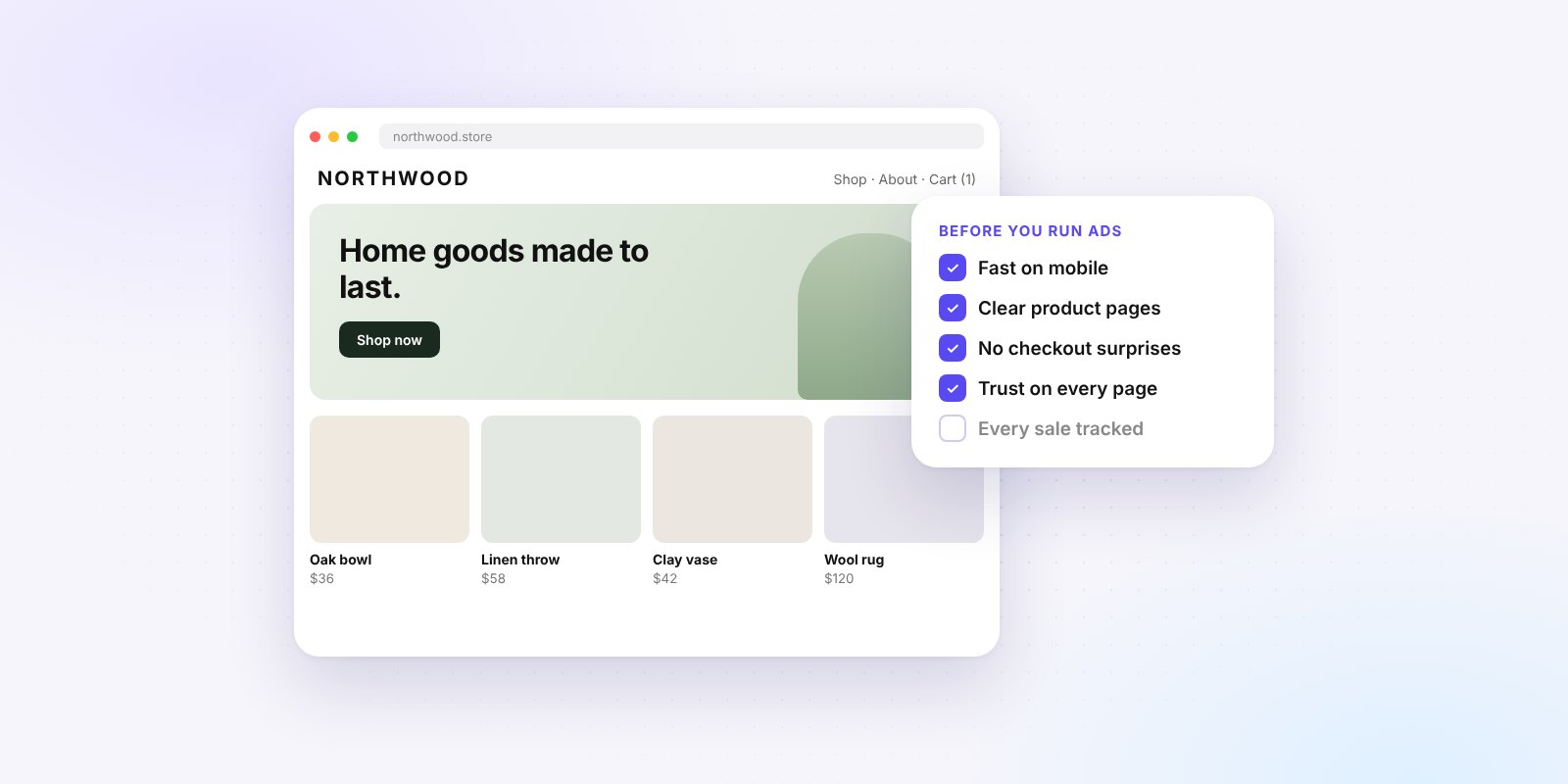
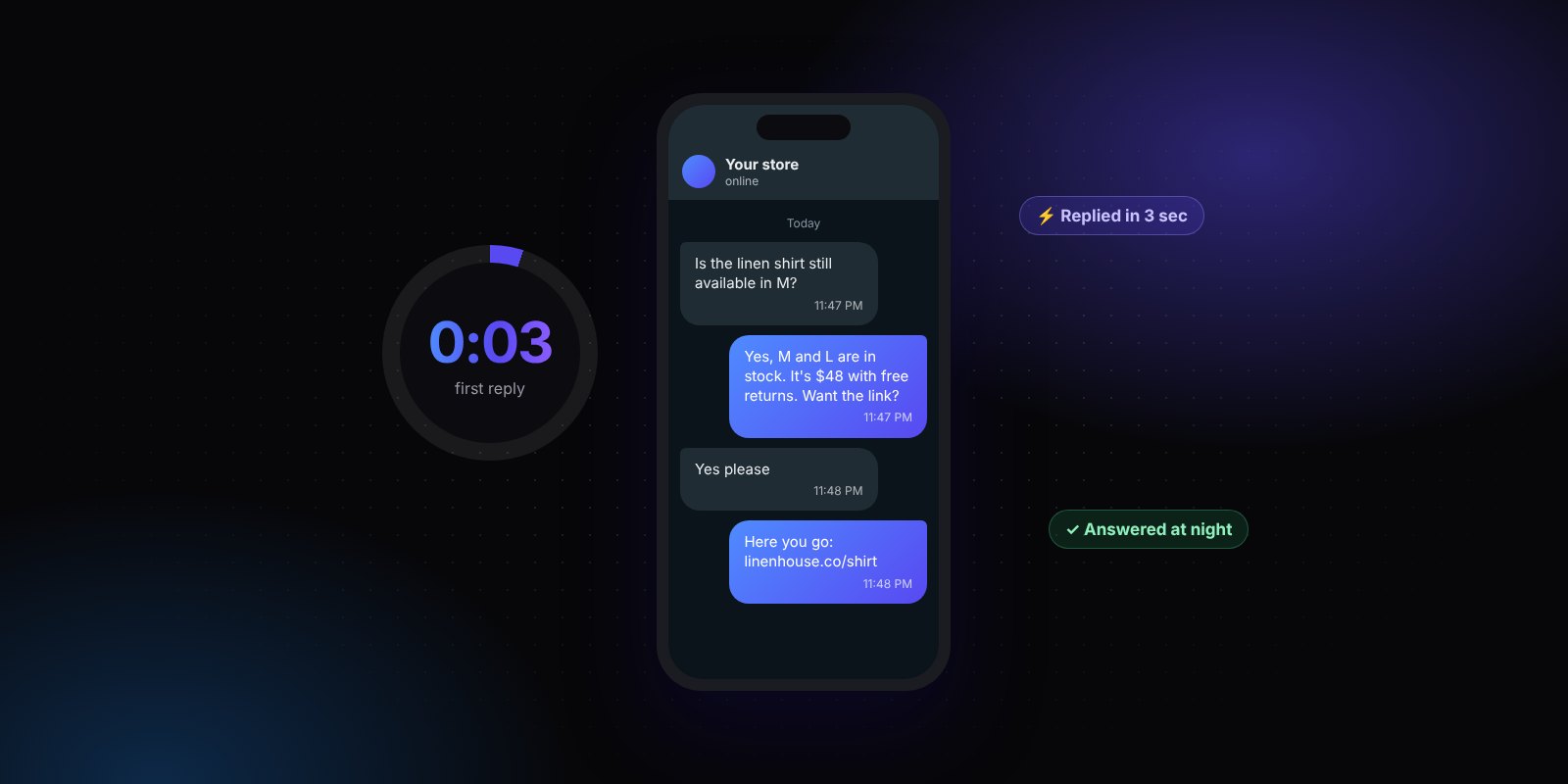
- Fund the basics first. Tracking, a working store and fast replies to leads come before more ad spend. If people message you and wait hours, read why the first reply wins the sale.
The numbers to watch
Pick a few numbers that connect to sales, and look at the same ones every week:
- Cost per sale or per lead, by channel.
- Conversion rate of the pages your ads and posts send people to.
- Returning customers and how many came back from email.
- Response time to new messages and enquiries.
If a number moves, ask why before you change anything. One bad week is noise. Three in a row is a signal.
How to run it every week
A plan that sits in a folder doesn't help. Keep it alive with one 30-minute review every Monday:
- Look back: what did we ship last week, and what did the numbers say?
- Look ahead: what's going live this week on each channel? Does it match the message?
- Decide: one thing to do more of, one thing to stop.
Common mistakes
- Planning channels instead of customers. Start from what the customer needs to hear, then pick the channels.
- Changing the message every week. People need to see the same idea several times before it sticks.
- Measuring everything. Pick three to five numbers. More than that and nobody looks.
- Skipping the foundation. Ads on top of broken tracking or a weak offer just burn money faster.
Want help building yours?
Our 360° strategy puts your events, content, campaigns and media budget into one 90-day plan, written down so your whole team can follow it. It starts with a free strategy session. Book your call and bring your current plan, even if it's scattered.